by Lars Hundley
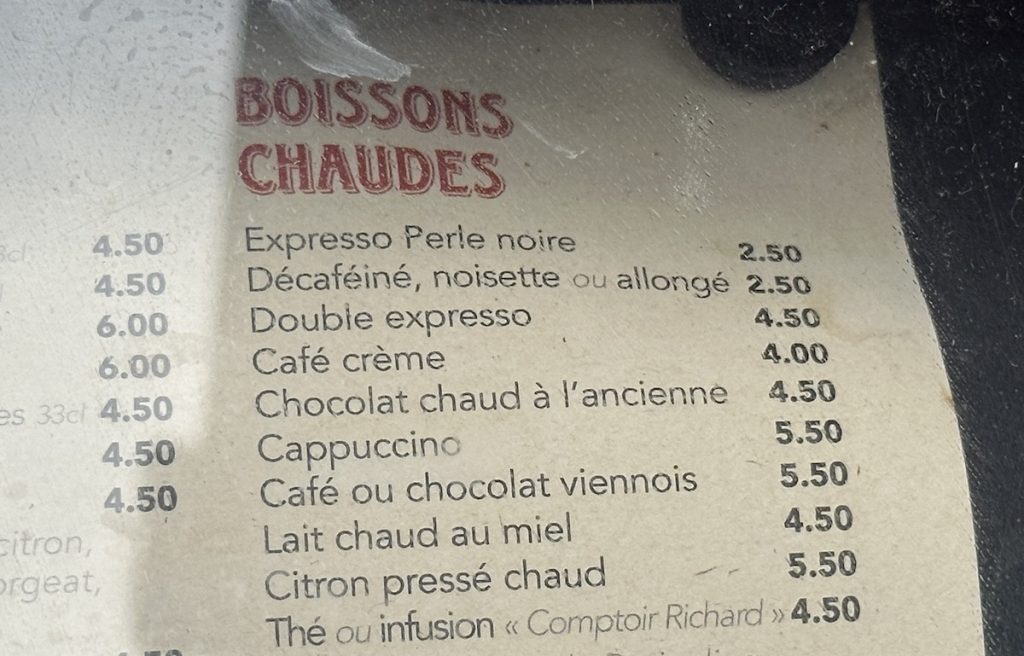
Perhaps you’ve heard people mispronounce espresso as expresso and rolled your eyes, feeling superior that you know the true pronunciation. But if you take a trip to France, get ready, because it really is EXpresso there, and spelled with an x instead of an s.
In the world of coffee, few drinks are as internationally recognized as the humble espresso. This potent shot of coffee, originating from Italy, has been embraced by cultures worldwide, each adding their own nuances to its preparation and consumption. Interestingly, as the word has been adopted into different languages, variations in spelling have emerged. One such example is in French, where “espresso” is spelled as “expresso.”
It’s not because the French don’t know how to spell though! It’s all about pronunciation.
This change in spelling stems from the French language’s phonetic and orthographic rules. Unlike Italian and English, where the ‘s’ can create a ‘ss’ sound, in French, the ‘x’ often fulfills this phonetic role. Hence, to maintain the pronunciation consistency with the original word, “espresso” becomes “expresso” in French. It’s worth noting that despite this orthographic adaptation, the word refers to the same coffee preparation method.
An espresso (or expresso in French) is traditionally a concentrated form of coffee, typically served in ‘shots.’ It is made by forcing pressurized hot water through finely-ground coffee beans using an espresso machine. This method results in a thicker, stronger coffee with a layer of crema on top, which is a creamy foam consisting of coffee oils and sugars.
Despite regional variations in spelling and slight differences in preparation techniques (like the amount of coffee used, the fineness of the grind, and the pressure and temperature of the water), the heart of the espresso, or expresso, remains the same. Whether in an Italian café, a French bistro, or an American coffeehouse, an espresso shot serves as the foundation of many beloved coffee drinks, from the cappuccino and latte to the Americano and macchiato.