
by Nigel Ong
Starbucks Sumatra Roast is one of the more popular coffee roasts from Starbucks. It is also one of the more popular single-origin coffees from the giant coffee house.
Having recently tasted the Nespresso version of the roast, I wonder if the pod version tastes the same as the original roasts. This made me pick up a bag of the Starbucks Sumatra Roast myself.
In this review, I will sample the Starbucks Sumatra Roast. I’ll brew the coffee several ways and then sample it with popular flavorings. I’ll also compare the roast with relevant coffees to see if you should give it a try.
About Starbucks Sumatra Roast
Starbucks Sumatra Roast was first introduced in 1971, the year Starbucks opened its operation. From then on, it was a staple offering and has remained one of its best-selling single-origin coffees ever since.
Known for its bold and full-bodied flavor, this coffee captures the essence of northern Sumatra’s lush, volcanic region, a major island in Indonesia. These are also where many world-winning single-origin coffees come from, such as Gayo, Lintong, or Mandheling.
The beans were harvested from the highlands and traditionally processed using the wet hull, or ‘Giling Basah’ method, common with Indonesian coffees. Starbucks then roasted the beans dark.
Sumatra coffee is known for its earthy tones and complex herbal nuances, which many attribute to the Starbucks Sumatra Roast. Many drinkers also enjoy the darker, bolder taste of the Starbucks Sumatra Roast.
This blend appeals to those who favor a stronger, more assertive cup of coffee. Its widespread acclaim is due to its unique taste and Starbucks’ commitment to ethical sourcing and sustainability.
As part of Starbucks’ exotic single-origin collection, Sumatra Roast has carved a niche among coffee enthusiasts who appreciate its rich history and bold, distinctive flavor.
First Impression
My bag of Starbucks Sumatra Roast comes in whole beans. The packaging is slightly different from the ones you see in the US since my bag is for the Asia Pacific market.
A chat with the barista confirmed that the beans were roasted to the same standard, regardless of region and packaging.
When I opened the bag, I was greeted with a fragrant smell of coffee, with a deep, earthy aroma. The pleasant aroma makes me want to sip some coffee immediately.
The beans are 100% Arabica and look quite even in shape and size, with few breakages. This should help produce a better-tasting coffee since the beans cook evenly in the roaster.
The beans are on the darker side. Color-wise, it is comparable to other dark roasts I have in my collection. Here’s an image of the beans side by side with other roasts.
Let’s get brewing.
How To Brew Starbucks Sumatra Roast?
With the Starbucks Sumatra Roast, I believe the three brewing methods below should help me sample the coffee well:
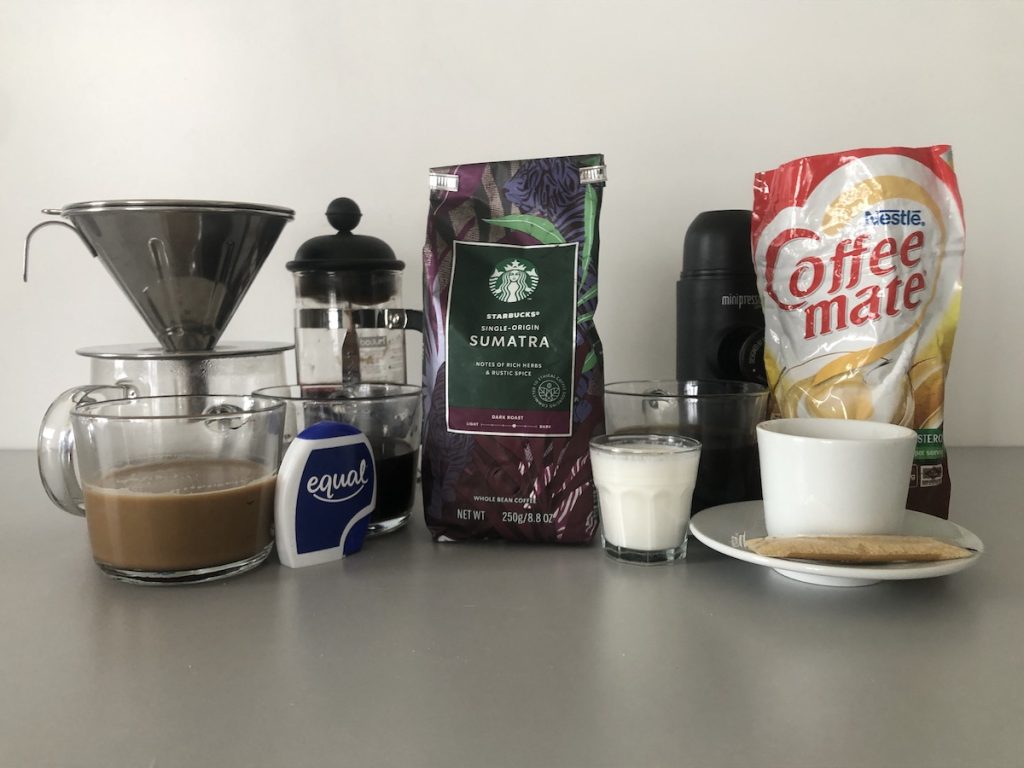
French Press
French press brews immersion, soaking the coffee ground to extract its flavor. This should help me to get a murky, full-flavored coffee with floating particles.
I will use my trusty Bodum Caffettiera French press to brew my French press. My brewing style is based on the recommendations by Illy Coffee.
I will keep to the 1:12 ratio, using 15 grams of coffee and 180ml of hot water at around 185°F (about 85°C). I will then stir the ground coffee and let the concoction brew for 4 minutes before pouring.
Pour Over With Filter Paper
Pourover uses filtration instead of immersion, passing water through the coffee ground to extract flavors.
It should produce a ‘cleaner’ version of the coffee without too much oil and particles floating about. This should help me to sample more of the subtle notes.
I will be using this set of gear to make my pour-over coffee:
My pour-over brewing steps are taken from Starbucks. I kept to a 1:18 ratio to simplify the process and used hot, off-boiling water for my pourings.
Espresso
Since the Starbucks Sumatra Roast is dark, it only makes sense to sample the coffee as an espresso.
For espresso, I will be using my Wacaco Minipresso GR to pull an espresso shot. This is a hand-held, manually-operated espresso maker.
How Does Starbucks Sumatra Roast Taste?
French Press
The Starbucks Sumatra Roast shows its character when I pour hot water into the grounds. The aroma is earthy, with a herbal undertone. The coffee looks a bit dark in color with some slight transparency.
When I took my first sip, I noticed the coffee’s overall earthy and herbal notes. The dark roast also has a good amount of smoke, which does not hold back against my palate.
The coffee’s herbal undertone gradually grows as I sip it. Here, I would say the herbal taste is more towards the mushroom-like taste, which gives this coffee a unique profile.
There are also some spice-like notes, probably star anise, but this is quite faint and not very noticeable.
The coffee finishes quite strong, too, leaving an aftertaste of slightly sweet notes on my tongue after I swallow the coffee. I would describe this sweetness as cherry-like.
Pour Over With Filter Paper
As expected, the pour-over version tastes lighter and less intense than the French press brew. The color is also slightly lighter.
When I look at the coffee from the bottom of my transparent glass cup, I can see less coffee sediments too.
This means the filter paper and the mesh in the pour-over set have removed some coffee oils and particles.
This cuts into the smoke and earthiness of the coffee, making it less intense. If you find the French press coffee too strong, this is an option for you to try.
The peanut note remains strong, with the cocoa not a little more evident here. The coffee’s finish also becomes shorter, making the sweetness more prominent.
Espresso
The Starbucks Sumatra Roast espresso is rich, with velvety and creamy crema. The color is beautiful, with a darker shade of brown. The aroma is smoky and earthy at the same time, and it is less intense than traditional espresso.
As for the flavoring, the espresso is bold and beautiful. The initial flavor is smoky, and the punch is strong. Following up are the earthy, herbal notes.
Resist the temptation to gulp the espresso down for just a second or two, and your tongue may pick up the mushroom notes and some slight cherry flavor. Swallow the coffee down, and then enjoy the long aftertaste.
With Sugar
I brewed a French press cup of Starbucks Sumatra Roast before adding a brown, coarse sugar stick to my cup. Appearance-wise, sugar added a bit of shine and sheen to the coffee.
When I sipped the coffee, I could feel more texture on the coffee. I kind of enjoy swishing the coffee in my mouth and letting the sweetness soak into my palate.
As for taste, the sugar accentuated the mushroom notes, making the coffee very nice to drink.
However, again, I found the smoke a bit weird with the sugar. I avoid dark roasts with sugar, as the smoke and sweetness usually don’t jive well with my palate.
With Sweetener
With sweetener, I turn to probably the most popular artificial sweeteners out there – Equal.
The active sweetener inside equal is Aspartame, which has different properties to sugar. As a result, the sweetness I get from Equal is a bit different than sugar.
When I sip my cup of Starbucks Sumatra Roast, the sweetness seems to come a bit later. I’ll get the smoke and earthy note before the sweetness comes in. It is also a bit more intense.
The sweetness also lingers much longer, staying on my palate long after I have swallowed the coffee. The whole experience is less natural, and I prefer the sugared version.
With Milk
I prepared a bit of whole, UHT, fresh cow’s milk to drink with my Starbucks Sumatra Roast. I added a single shot (about 30 ml or 1 oz) into my cup of coffee.
The milk turns the coffee brownish, and it loses its slight transparency. This gives it a more solid body. The coffee also developed a bit of texture, probably taking in the viscosity of milk. The coffee feels more playful and ‘bouncy’ inside my mouth.
Taste-wise, the milk takes away some of the bolder and earthy flavors of the coffee. It also cuts into the mushroom-like notes a bit, making the coffee less edgy in flavor. There is also some subtle sweetness, thanks to the lactose in the milk.
With Creamer
I then made another cup of IKEA Patar Medium Roast and added two sticks of Coffee Mate creamer.
Coffee Mate is a non-dairy creamer made of palm oil, which makes it popular with those who are lactose intolerant.
Like milk, the coffee now tastes richer, creamier, and thicker. However, I think milk adds more cream to the coffee. The texture of the coffee becomes thicker and more slippery, making the coffee glide around my tongue easily.
The whole cup of coffee is a little sweeter, although it tastes less natural than milk.
Starbucks Sumatra Roast vs Sumatra Roast Nespresso
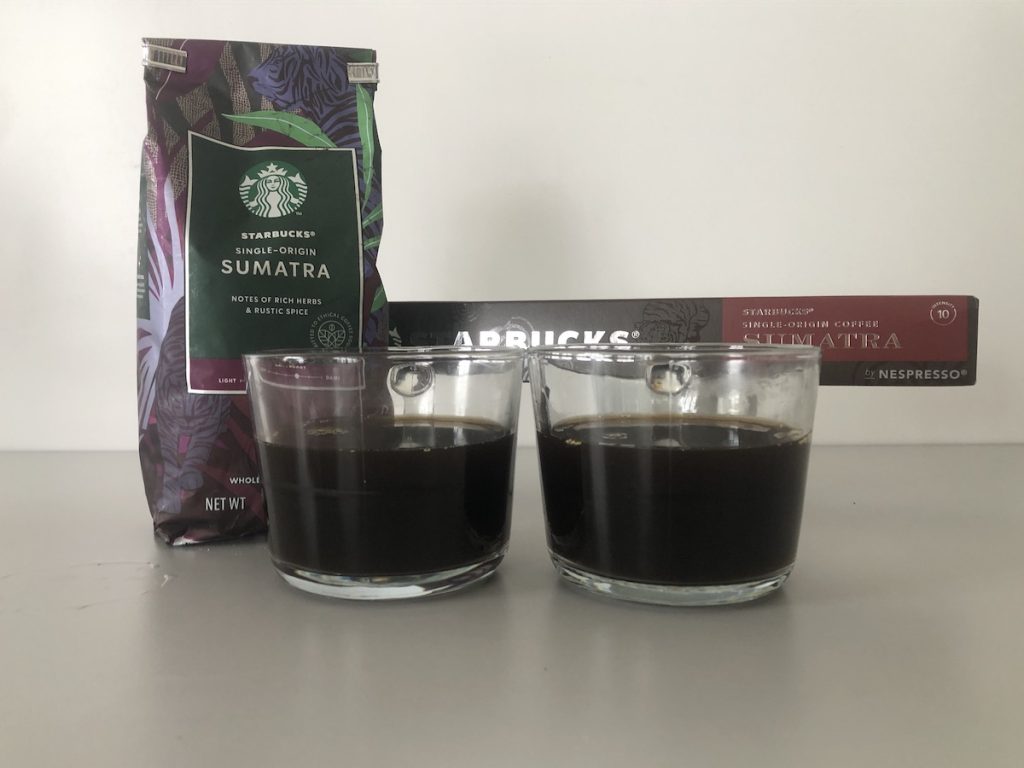
I look forward to this comparison and hope that the coffee’s original roast and the Nespresso version don’t taste too far apart. I made two cups of Americano from both coffees and sampled them.
I do not notice any major difference, which is good to know. This could be because both come from the same coffee source. The only difference is that the Nespresso version of the Starbucks Sumatra is packaged in an aluminum capsule.
This is much different from when I compared the Pike Place Roast with the Starbucks Via Pike Place Instant Coffee. When I compare those, the taste is very different, and disappointingly so.
Starbucks Sumatra Roast vs. Other Sumatra Roasts
Since the Starbucks Sumatra Roast is a single-origin Sumatran coffee, I’ll compare it against some other Sumatran coffee in my stash:
- Sumatra Lintong Coffee
- Sumatra Gayo Coffee
From here, I would say that the Gayo coffee tastes best. There is some herbal, mushroom-like note, but it is not as strong as the one from Starbucks.
Plus, it is not roasted dark, which means less smoke, making the coffee more comfortable to sip. I prefer the Lintong coffee second, probably because it is a medium roast.
The Starbucks Sumatra is nice, but its smoky roast made it less enjoyable. You may have a different take if you enjoy darker roasts.
Starbucks Sumatra Roast vs. Other Dark Roasts
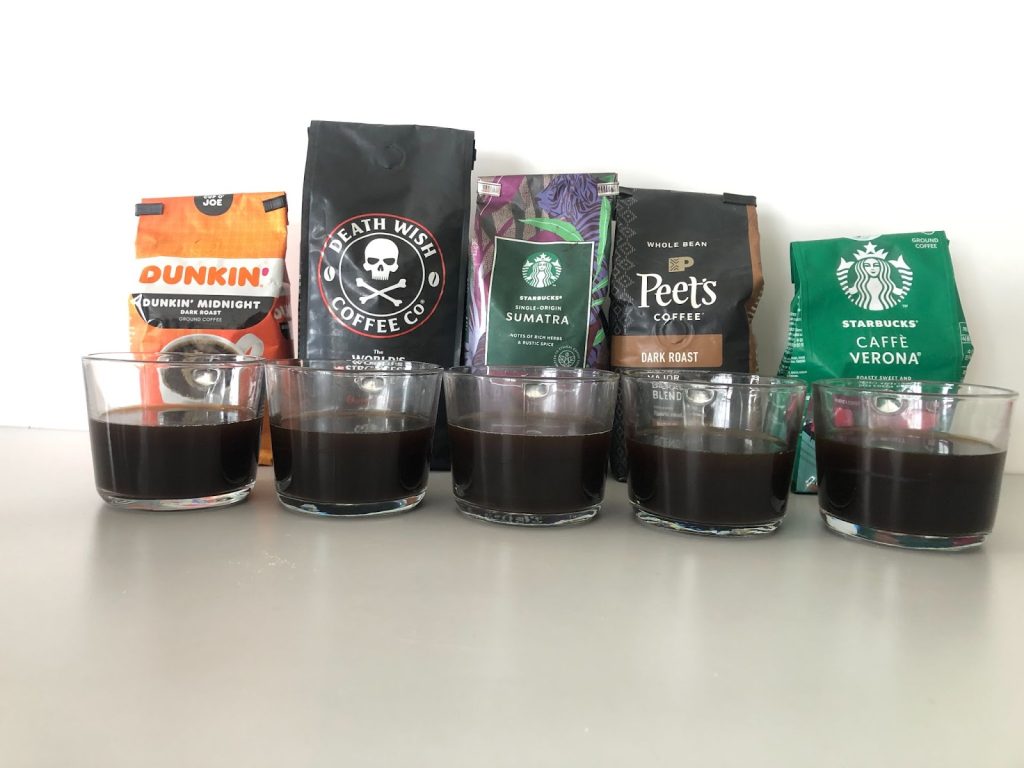
Next, I’ll compare the Starbucks Sumatra Roast with my other dark roasts. These include:
- Starbucks Caffe Verona
- Dunkin Midnight Roast
- Peet’s Major Dickason
- IKEA Patar Dark Roast
- Death Wish Coffee’s World’s Strongest Coffee
I would place it ahead of the Starbucks Caffe Verona, Death Wish, and IKEA Patar, but not as good as the Midnight Roast and the Major Dickason.
Starbucks’ Sumatra Roast may be nice, but its mushroom flavor does not give me enjoyment and satisfaction compared to the nutty, chocolatey notes from the Midnight Roast and Major Dickason.
Starbucks Sumatra Roast vs Regular Coffee
Finally, I picked up a cup of regular Americano from the most regular of places, a 7-Eleven.
The idea here is to compare Starbucks Sumatra Roast with a regular cup of coffee, especially those $1 cups you can get from gas stations or convenience stores.
This may be a foregone conclusion, but I have to say the Sumatra roast wins, hands down. It has better flavor depth and a more pleasant finish. It gives me more satisfying sips, too.
The regular coffee tastes bland, with little flavor. The bitterness is also flat and may remind you of dirt. There’s also some watery taste, suggesting underbrewing to me.
Is Starbucks Sumatra Roast For You?
After sampling the Starbucks Sumatra Roast, I would say that this coffee is another typical Starbucks roast – roasted darker than needed, but perhaps to mask issues with the beans, perhaps.
There is a reason why Starbucks is called ‘Charbucks,’ and this roast is probably contributing to the moniker.
Flavor-wise, this coffee will work for those who see deep, earthy, and herbal notes in their coffee. If you like mushroomy and spicy notes, this coffee will work wonders, too. However, you are better off avoiding this roast if you prefer something else. If you start with dark roasts, this may not be a good coffee, too, as the taste is too edgy. Perhaps starting with a Major Dickason is a better place.