
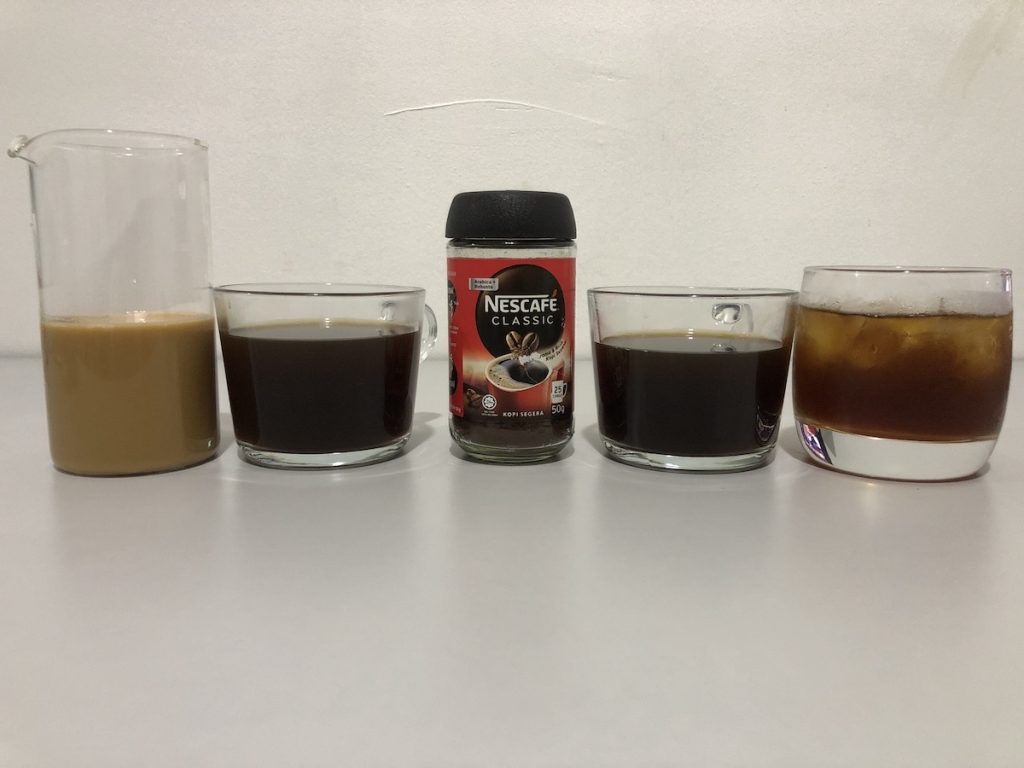
by Nigel Ong
In the US, we have Folgers. For many other parts of the world, the default instant coffee is Nescafe Classic. Affordable and has good taste, Nescafe has been the instant coffee sipped by billions worldwide.
But how good is it? Was it well received worldwide because of the price, or was it a genuinely excellent instant coffee? How does it compare against other popular instant coffee?
In this post, I picked up a bottle of Nescafe Classic and tested it. I also tried it with many common coffee flavorings to see how it tasted. Finally, I compared it against other popular instant coffee.
About The Nescafe Classic
In 1929, Brazilian coffee farmers approached Louis Dapples, chairman of the board of directors at Nestle. During that time, there was an overproduction of coffee in Brazil. This means many coffees simply went unsold and rotted away.
Louis was asked if there is a way to utilize coffee in their food products.
Louis went to work with the chemists. Initially, the idea is to produce dried coffee tablets that can be melted with hot water to make coffee. However, one of the chemists, Max Morgenthaler, discovered that dried powders may be easier to make and brew.
The first Nescafe hit the shelves in 1936. It was an instant hit. By 1940, 30 countries offered it, and it even became US soldiers’ food rations during World War 2.
Nescafe has since improved the original recipe and used the same instant coffee system to introduce more refined instant coffee blends, such as Nescafe Gold, Alta Tica, or Azera.
Today, Nescafe Classic blends Arabica and Robusta blends, roasted medium-dark. This coffee is first brewed and then freeze-dried into granules. You then add hot water to rehydrate the dried granules to make coffee.
Nescafe Classic is available in many shops worldwide. It should remain the preferred choice for billions for the years to come.
How Does The Nescafe Classic Taste?
First Impressions
I went to a local store and picked up a small glass jar of the Nescafe Classic. You can easily tell it apart from its more premium sister, the Nescafe Gold. Nescafe Classic has black colored packaging, while Nescafe Gold has gold packaging.
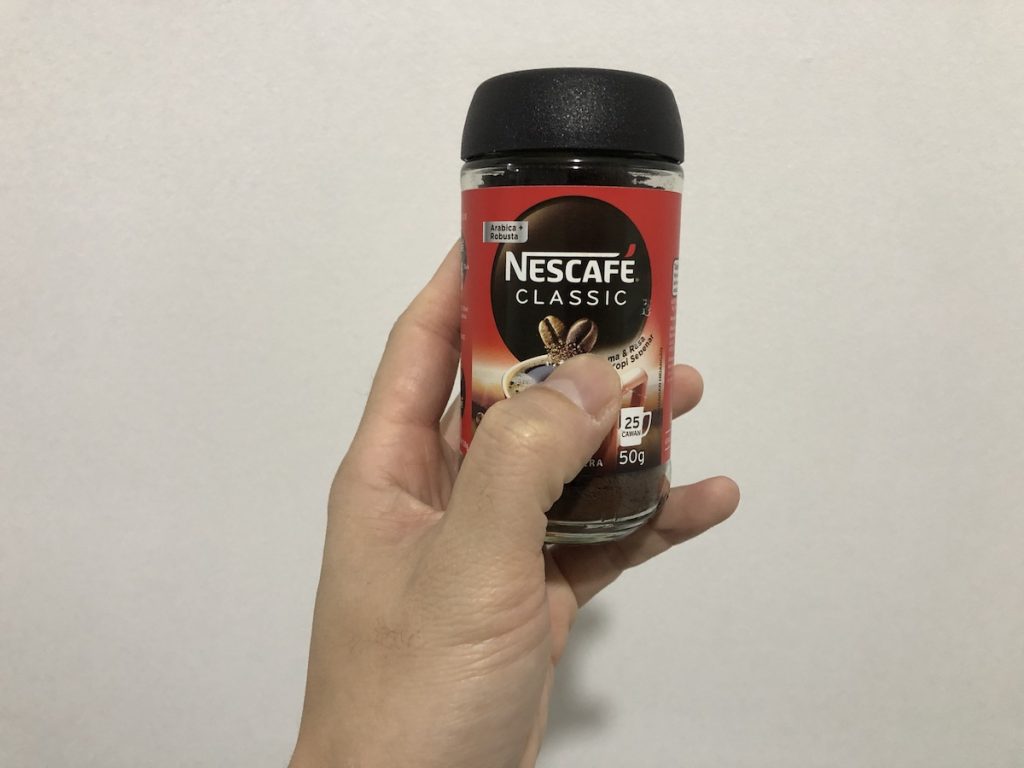
Depending on where you live, you may see them in glass jars or in plastic packaging. There is also stick instant coffee, similar to your Starbucks Via. Mine is in a glass jar with a plastic twist cap.
Once I removed the cap, a thin paper and aluminum foil covered the coffee granules. Unlike the Illy Classico or Lavazza Prontissimo, there is no pull tab here.
You need to poke at the foil to make a hole and then work your way to open the coffee up. Not very convenient, to be honest.
Once I get everything out, I do not really smell much coffee. I must bring my nose closer to the coffee to smell anything. The coffee smells a little nutty, perhaps from the robusta beans.
The granules look uneven. You have rounded granule chunks the size of regular sugar. However, there are also powder-like bits and many others. This, to me, gives Nescafe Classic the impression it’s a lower-quality product.
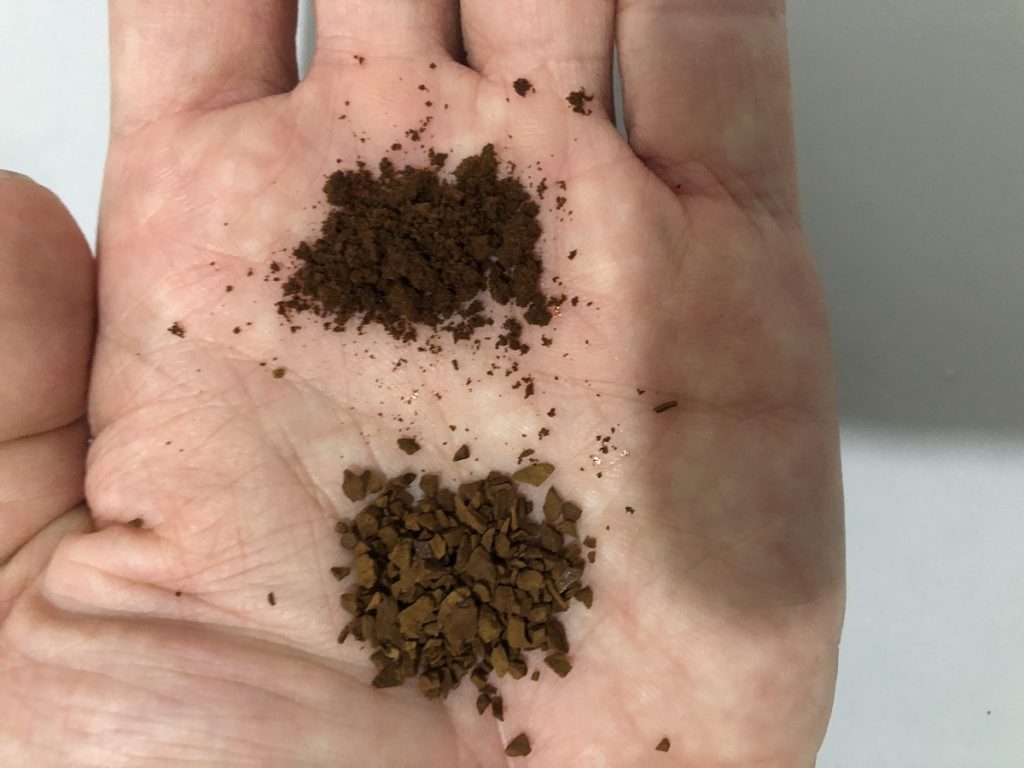
Granules of Nescafe Classic (above) vs Nescafe Gold (Below)
These uneven coffee granules are also unlike Nescafe Gold or other more premium instant coffee I have tried too. No one has such uneven granules as Nescafe Classic.
Black
As a start, I added two teaspoons of Nescafe Classic into 180ml of hot water at 185°F (85°C). I gave it a stir and noticed a waft of aroma. It takes hot water to bring out the Nescafe Classic’s aroma.
I took my first sip. It does not give me much information, as it was too hot. I noticed the coffee is not very strong and does not smash my palate with bitterness. It is not smoky compared to some instant coffee, such as Lavazza Prontissimo Intenso.
There is also less earthiness. One problem with instant coffee is its strong earthiness. Too much, and the instant coffee just tastes like dirt. The Prontissimo Classico escaped this curse.
As the coffee cooled down a bit, I started to pick up some flavors from the coffee. I tasted some bittersweet notes, perhaps dark chocolate. The earthiness is also less pronounced when it is a little bit colder.
With Ice
Ice coffee has its charm. It helps to cool the coffee for quick sips and, in some situations, helps mute undesired flavors and highlight desired ones. Will Nescafe Classic taste good iced?
I poured 180ml of hot Nescafe Classic into a full glass of ice. I threw in a straw and started sipping.
To my tongue, I noticed that the ice helped to kick up the bitterness of the coffee. I also notice a general increase in a slightly sour taste, perhaps the acidic notes. The coffee, when cold, gives you that deep, bitter taste that some may find refreshing.
I, however, am a little concerned with the earthy quality of the bitterness. When iced, this flavor gets a little too much in the coffee. Some may not like this, as it can make the coffee taste like dirt.
With Sugar
I added a stick of granulated brown sugar into another fresh cup of Nescafe Classic and stirred them in. As I do that, I notice the coffee picking up more shine and viscosity. The sugar melts easily too.
The coffee tastes sweeter and helps remove some of its bitter and earthy notes. This makes the coffee smoother. You will find Nescafe Classic enjoyable if you prefer sugar in your coffee.
With Sweetener
Not everyone takes sugar with their drink since it can cause diabetes. Many have since switched to zero-calorie sweeteners, such as aspartame. I thought I’ll taste Nescafe Classic with these too.
I added a drop of Equal sweetener into a 180ml cup of hot Nescafe Classic. The coffee tasted sweet and nice and should appeal to those that like sweet coffee.
However, I noticed that the sweet taste comes slightly later and that lingering sweetness stays in my mouth longer, even after the coffee flavor has finished. I suspect this is aspartame in action.
I made another cup and, this time added two drops of Equal. This is when the coffee becomes too sweet for my liking, and I think one drop should be enough.
With Milk
Next, I moved to try the coffee with some fat. This time, I added a shot (about 30ml) of hot UHT cow’s milk into my cup of Nescafe Classic.
I enjoy having fat in my coffee, so my opinion of Nescafe with milk may be slightly skewed toward the positive side. Give it a try yourself to confirm what I tasted.
The fat from the milk mellows the coffee down and adds another layer of flavor that makes the coffee better. There is also a stronger sweet taste, probably the lactose from the coffee.
This makes the coffee much more sippable, which you sip on as you talk to your spouse or family in the afternoon.
With Creamer
Like sugar, people switch to non-dairy fat to avoid issues with lactose. Plus, Nestle does have its own version of coffee creamer, the Coffee Mate. I thought I’ll marry the two together and see.
After stirring in two sticks of Coffee Mate, The coffee picked up a nice light color. It also has a slightly different aroma compared to the black Nescafe Classic. The coffee does not feel heavier in texture compared to if you use milk.
The creamer also adds a more creamy taste to the coffee than milk and more sweetness. The sweetness is, however, less intense than using sugar and does not taste too artificial.
Nescafe Classic vs Nescafe Gold
It only makes sense to compare both since they are from the same family. I brewed fresh cups of Nescafe Classic and Gold and sipped them side-by-side.
I can immediately tell which coffee is more premium. Nescafe Gold has nicer-looking granules and produces coffee with more aroma. It also has more depth in taste and leaves me with more satisfying sips.
Nescafe Classic tastes more earthy, to the point of being close to dirt if you are not used to its heavier taste. It also cannot compare flavor depth with Nescafe Gold, although I have tasted worse coffee before.
I believe if I am blind-tested with the Nescafe Classic and Gold, I can quickly able to tell apart which is which.
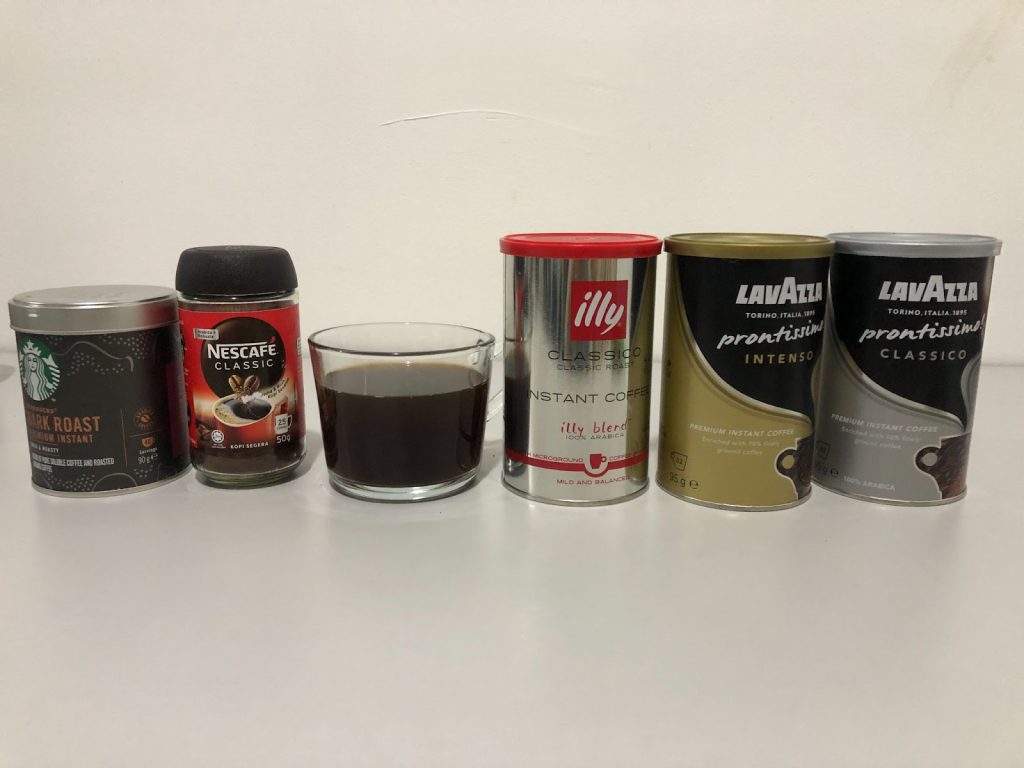
Nescafe Classic vs. Other Instant Coffee
I made small cups of other instant coffee in my stash, then drank them with my Nescafe Classic. They include:
- Lavazza Prontissimo Intenso
- Lavazza Prontissimo Classico
- Starbucks Premium Dark Roast Instant Coffee
- Illy Classico Instant Roast
Taste-wise, I would rank Nescafe last among these instant coffees. It certainly cannot compare against Illy or Starbucks’ instant coffee. With Lavazza’s, Nescafe Classic may be competitive but still falls slightly behind.
Nescafe Classic vs. Regular Coffee
With Nescafe Classic rather low on its taste, you may wonder how it compares against other common lower-quality coffee. Yup, those you get in gas stations or convenience stores.
Nescafe classic tastes are probably within the range of your gas station coffee. It does not have much depth in taste and may have a strong earthy taste that is not too far different from regular coffee.
It may be a great idea to treat Nescafe Classic similarly to your regular coffee; drink them when you need to. If you have better options, always pay more and get those instead.
Who Will Enjoy Nescafe Classic?
As a start, Nescafe Classic is not a high-quality coffee, nor does it pretend to be one. Nestle marketed it as a mass-market coffee with a focus on affordability. Nestle markets its premium instant coffees through labels such as Gold or Azera.
However, it does taste like coffee and should satisfy most palates. If you are not too pedantic about coffee, you may not mind the coffee.
I have once described a regular McCafe roasted coffee such as Premium Roast as a Toyota Camry. It is not edgy in taste but should produce comfortable, consistent flavors when you need it.
With the Nescafe Classic, I’ll call it the Kia Rio. It may not have special flavors nor provide a premium experience. However, it is fast and cheap and should provide reliable, consistent flavors.Consider paying more to get better instant coffee when you have options. Even those just slightly more expensive, such as the Illy Clasicco, can taste so much better, and you will be glad you sip those than a Nescafe Classic.