

by Nigel Ong
When it comes to coffee, Indonesia is a huge playground. All its major islands produce great coffee, each with unique flavors and characteristics. The island of Java alone has many great coffee regions.
One such is the Preanger, also known as Parahyangan or Priangan. This is probably one of Java’s most celebrated coffee regions, producing some of the best quality Indonesian Arabica coffee.
In this post, I review the Java Preanger Tilu single-origin coffee. I will brew it three ways before sampling it black and with popular flavorings. I will also compare it with other related coffees in my collection.
About Java Preanger Coffee
Java Preanger coffee comes from the Preanger (also Parahyangan or Priangan) region in West Java, Indonesia. The Dutch called the area Preanger, with the name changed to the latter after Indonesia’s independence in 1945.
It is probably one of the earliest regions to have coffee trees planted in Indonesia, with the Dutch starting coffee plantations here as early as the 17th century. The largest city in the region is Bandung.
The Preanger region is rather large but is mostly highlands, with the peak being Mount Tilu. The higher altitude, rich volcanic soil, and cool temperature made the Preanger region excellent for Arabica coffee growing.
Preanger itself also has smaller coffee regions, such as Ciwidey, Pangalengan, and Malabar. As a result, you may find some single-origin coffees such as Java Preanger Ciwidey, Malabar, and so on.
Java Pranger coffee is generally processed using the Giling Basah (wet hull) method, which is slightly different from natural or washed processing common in many other places. This gives it a unique taste.
How Does Java Preanger Single-Origin Coffee Taste?
I picked up some Java Preanger Tily single-origin coffee beans during my recent trip to Indonesia. My bag comes from Sakha Coffee, an independent local roastery based in Jakarta, Indonesia.
| Coffee Type | Additional Notes |
| French Press | Soft, and mellowFlavors of fresh bread and hints of peanuts and cocoaNo detectable citrus notes |
| Pour Over With Filter Paper | Mellow and satisfyingMedium finish with a hint of brown sugar. |
| Espresso | Fragrant aromaAcidic cremaSome cocoa bitterness and a light sweet finish. |
| With Sugar | Adds a sheen and thicker textureEnhanced the fresh bread flavor |
| With Sweetener | Similar with sugarLess natural, with a very long sweet finish. |
| With Milk | Adds more texture to the coffeeSoftens the coffeeEnhanced the fresh bread flavorSlightly sweetens the coffee |
| With Creamer | Similar to milkLess creamy than milk |
| With Ice | Increased acidity |
First Impression
My coffee beans are 100% Arabica and are roasted to medium intensity. I understand that the beans inside my coffee beans are from the Preanger region, specifically around the Mount Tilu region. This explains the Tilu name on the label.
The coffee bag could barely keep hold of the beans’ aroma – I could smell the coffee even before I opened the bag. Once I did that, I picked up a fragrant smell of coffee, with hints of peanuts and a bit of sweetness.
The beans themselves are roasted quite light and have quite even sizes. I did not see any giants or dwarf beans when I poured some of the beans out.
The label says the coffee has notes of brown sugar, orange zest, and citrus. Let’s see if I can taste these things later.
For brewing, I will use the three default brewing methods, similar to my other reviews:
French Press: This brewing style makes a murky, full-flavored coffee with floating particles. This should allow me to sample the coffee in all its ‘glory.’ I expect full flavor and strong flavor with this coffee.
Pour Over With Filter Paper: This method produces a ‘cleaner’ version of the coffee without too much oil and particles floating about. This should help me to sample more of the subtle notes.
Espresso: Espresso can generally concentrate flavors well, especially at the crema. An espresso should help me better appreciate the flavors in this coffee.
French Press
I used the 1:12 coffee-to-water ratio recommended by Illy Coffee. To brew my French press coffee. I also used my usual Bodum Caffettiera French press to make my French press brew, although you can always use your French press of choice.
If you prefer a cheaper option. Check out IKEA’s Upphetta French press.
The coffee looks lighter in color compared to regular medium roasts. On the first sip, I immediately noticed the softness and mellowness of the coffee.
This Java Preanger coffee has little smoke and does not have a harsh taste. Instead, the coffee has a soft, fresh, bread-like flavor with hints of peanuts and cocoa.
As I sipped the coffee, I also noticed the medium finish of the coffee. My tongue also has a lingering, brown, sugar-like light sweetness.
This is a very good cup of coffee, and I thoroughly enjoyed it. However, as the label claimed, I could not detect any orange zest or citrus notes in the coffee.

Pour Over With Filter Paper
I use the following gear for my pour-over coffee:
My pour-over brewing method is based on what Starbucks recommends. I also kept a 1:18 ratio and used hot, off-boiling water.
As expected, the pour-over coffee tastes lighter and less intense than the French press brew. The filter paper removed some coffee oils and particles, mellowing the coffee.
My cup of pour-over Java Prenger Tilu retains its mellow yet satisfying flavor. The fresh bread and peanut flavor show through clearly here, as well as a hint of cocoa in the coffee.
The medium finish remains enjoyable, with the hint of brown sugar capping the experience after swallowing the coffee.
Espresso
I grabbed my Wacaco Minipresso GR and pulled a shot. This affordable, portable, hand-operated espresso maker is one of my favorite coffee gear.
The result is a surprisingly fragrant espresso with thick crema. Since it is not roasted dark, the crema is a little pale, with the color closer to latte foam. The aroma is light, without much smoke.
The espresso concentrates the flavor of the roast, which helps me to sample the drink better. In espresso form, the coffee has good cocoa bitterness and a bit of brown sugar sweetness at the finish.
I am, however, a bit bothered by the crema. It turned a little too acidic for my liking. Perhaps the crema concentrated the citrus notes, turning the creams too sour for my palate to accept.
With Sugar
Here, I brewed a fresh cup of Java Preanger coffee and added a stick of brown, granulated sugar to the coffee. I stirred the coffee to dissolve the sugar and went in for my sip.
As usual, sugar does its magic in adding a bit of sheen to the coffee. I can also notice a thicker texture on the coffee.
The sugar sweetens the coffee and helps bring out the fresh bread flavor more. It also accentuates the brown sugar taste at the finish, making this coffee more enjoyable to sip.
Sugar works well with this coffee since it does not have too much smoke or earthiness.
I usually do not enjoy sugar with darker roasts, as the smoke and sweetness often fight each other for my palate’s attention, taking away the smoothness of the coffee.
With Sweetener
I turned to Aspartame, or its branded name, Equal, for sweetener. I added two drops of it to my cup of coffee. Unlike sugar, sweeteners do not seem to add a sheen or make the coffee thicker.
However, it does about the same in flavor as the coffee. There is a stronger fresh bread flavor and brown sugar finish.
My issue with artificial sweeteners is how unnatural it is. Unlike sugar, the sweetness comes a little later after you sip the coffee and stays in the finish much longer. I prefer the sugared version over this one.
With Milk
I poured a shot of fresh, whole, UHT cow’s milk into a fresh cup of Java Preanger coffee. A shot is about a single ounce of about 30 ml to those who do metric measurements.
The milk adds more texture to the coffee, making it slightly thicker. It also softens the coffee, making it an even more indulgent cup.
The milk adds more padding to the fresh bread flavor and slightly sweetens the coffee, especially at the finish. This could be the lactose in action.
With Creamer
After making another cup of Java Preanger, I added two teaspoons of Coffee Mate non-dairy creamer to my coffee. I stirred to dissolve everything evenly, and went in for my sip.
The creamer did about the same thing to my cup. It mellows the coffee further and accentuates the fresh bread flavor of the coffee. There is also a slight increase in sweetness, particularly at the finish.
However, the creaminess from milk gives me more satisfaction. I prefer my Java Preanger coffee with milk instead of creamer.
With Ice
I added half a cup of Java Preanger coffee into an ice-filled glass. I brewed the coffee more concentrated since it will melt some ice and become slightly diluted.
I stir things in to ensure the whole coffee is chilled before taking my sip.
To me, the coffee tastes alright with ice. The coffee lacks smoke and bitterness initially, and ice does not seem to alter that. The coffee’s fresh bread, the woody note remains.
There is, however, an increase in the acidity of the coffee. The coffee has the same issue as the espresso version when iced.

Java Preanger vs. Single-Origin Indonesian Coffee
The Java Preanger is one of the many single-origin Indonesian coffees I have in my stash. I pulled out some of these coffee, brewed them, and then drank them side by side with my Java Preanger:
- Papua Wamena Roast
- Java Roast
- Sumatra Lintong Roast
- Sumatra Gayo Roast
I am specifically interested to see if I could detect many differences between Java Preanger and Java Coffee. Both seem to have that fresh bread, chocolatey note. The only difference I can pick up here is the Java Preanger has a peanut-like flavor.
As for the rest, I think the Java Preanger is probably only behind the Papua Wamena roast. The Papua Wamena roast has this malty note that I just prefer more.
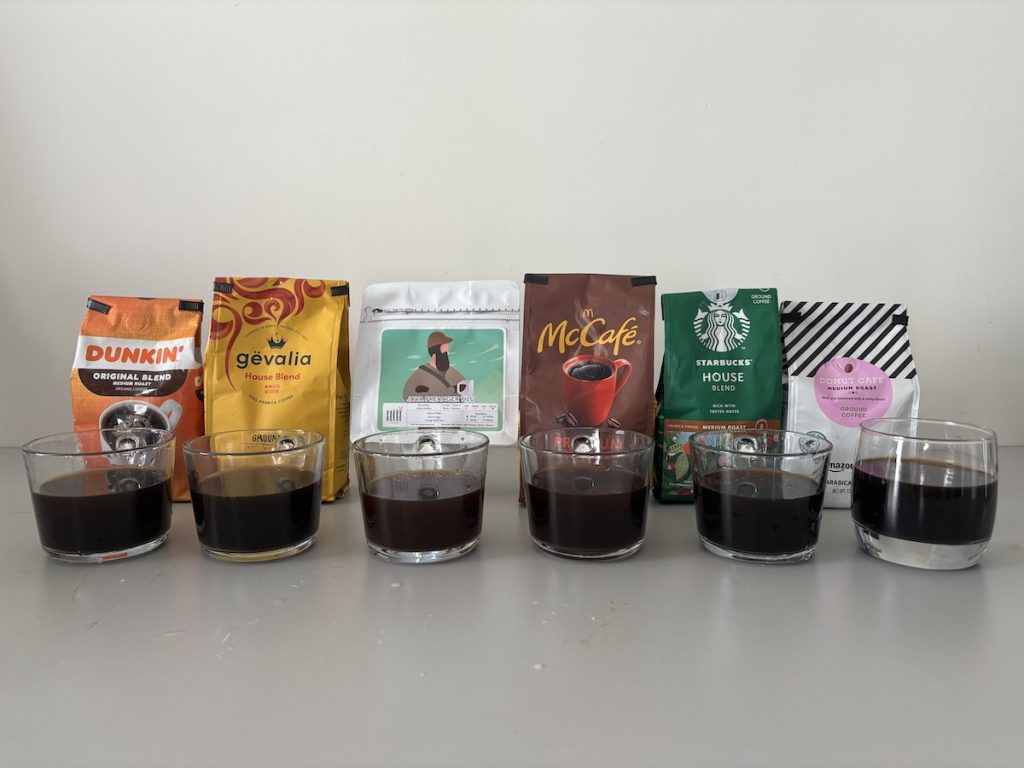
Java Preanger vs. Popular Medium Roast Blends
To help you get a better idea of how the Java Preanger coffee tastes, I think comparing it against popular, grocery medium roasts would help.
I pulled out these coffees and sampled them side-by-side with the Java Preanger:
- Starbucks House Blend
- Gevalia House Blend
- AmazonFresh Donut Cafe Medium Roast
- Dunkin Original Blend
- McCafe Premium Roast
Comparing single-origin beans with blends may not be a fair match, but I do say that in this case, I think I prefer the blends. In particular, the Dunkin Original Blend and the McCafe Premium Roast.
These two coffees are rich, with a good body and a ‘jab.’ The Java Preanger is nice in its own way, but it ‘slaps’ rather than ‘punches’ my palate. It lacks the jolt, making me less satisfied after sipping the Java Preanger.
Java Preanger vs. Regular Coffee
I picked up an Americano from the most regular of places, a 7-Eleven.
The reason? I want to compare the Java Preanger coffee with a regular, $1 coffee from gas stations or convenience stores.
The verdict? Java Pranger wins, hands down. It just tastes better and provides me with more satisfying sips. The 7-Eleven coffee just tastes flat and lacking in depth.
Where To Get Java Preanger Coffee?
As much as Sakha Roastery makes great coffee, it does not sell to overseas customers. One good thing is that you can find Java Preanger single-origin coffee from other roasters.If you are US-based, check out Gillespie Coffee, Mystic Monk Coffee, and Medleno Coffee. Roasters also offers Java Preanger in the UK, Canada, and more. A bit of searching should find you a roaster near you.