
by Nigel Ong
Sulawesi (Celebes) in Indonesia is known for its excellent coffee, with major production regions in Toraja and Kalossi. What happens when you put coffee from both sides together?
In this post, I will review the Sulawesi Kalossi Toraja coffee. I will brew it several ways and then try it with popular flavorings. Finally, I will compare it with other popular medium roasts and suggest who will enjoy this coffee.
About Sulawesi Kalossi And Toraja Coffee
Kalossi and Toraja are two distinguished coffee varieties from Sulawesi. Also known as Celebes, it is an Indonesian island known for its unique coffee-producing regions.
For Kalossi coffee, you’ll find it primarily cultivated in the highlands of Southern Sulawesi, near the town of Kalosi, which lends its name to the coffee. This region’s volcanic soil and high altitude contribute significantly to the coffee’s flavor profile.
You can expect a full-bodied taste with a rich, spicy character when you sip Kalossi coffee. It often presents notes of cedar and a unique winey acidity, offering a complex and enjoyable experience.
Toraja coffee, on the other hand, hails from the central mountainous region of Tana Toraja. This area is revered for its traditional coffee-growing methods, often involving small family farms and a deep respect for ancestral farming techniques.
When you taste Toraja coffee, you’ll likely notice its medium body and vibrant yet smooth acidity. Its flavor is intricate, often with hints of ripe fruit and dark chocolate.
Both these Sulawesi coffees stand out for their distinctive flavors and the unique terroir of their production regions. Sip some, and you’re in for an enriching coffee experience.
First Impression
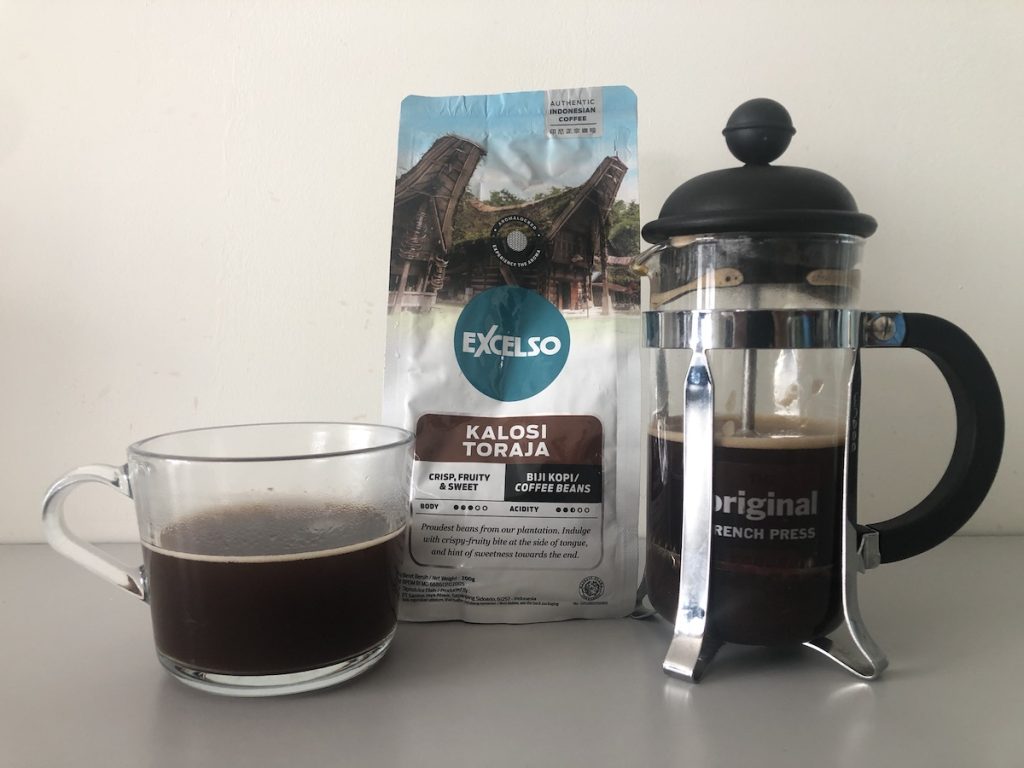
My particular bag of Sulawesi Kalossi Toraja coffee is from Excelso. Excelso is a major coffee house in Indonesia, roasting coffee and also operating cafes all over the country.
This is a medium roast, combining beans from both regions into a single bag of coffee. The packaging describes the coffee as having a ‘crisp, fruity, and sweet’ flavor. Further descriptions include a medium body and acidity.
This coffee is well packaged, with reusable airtight seals helping keep the beans fresh even after opening them. A one-way valve also allows excess carbon dioxide to leave the coffee bag, preventing oxygen from entering.
When I tear open the coffee bag, I can quickly pick up some peanut-like aroma. There is also some aroma of fresh bread, although I could not pick up any sweet or fruity notes.
It’s not described in the coffee bag, but I’ll reserve my judgment until I have sampled it.
As for the beans themselves, they look even, with most keeping well to their shape. This likely means the coffee beans may have been pre-selected, indicating quality. The medium roast is evident on the beans, as it is closer to the ‘brownish’ side than black.
How To Brew Sulawesi Kalossi Toraja?
I will brew the Sulawesi Kalossi Toraja coffee in three ways: French press, Pour, and espresso. Here’s why and how:
French Press
This brewing style makes a murky, full-flavored coffee with floating particles. This should allow me to sample the coffee in all its ‘glory.’
I will brew my coffee using the Bodum Caffettiera French press. My brewing style and method are based on the recommendations of Illy Coffee.
I’ll keep to the 1:12 ratio, using 15 grams of coffee and 180ml of hot water at around 185°F (about 85°C). After stirring the coffee ground, I will let the concoction brew for 4-5 minutes before pouring.
Pour Over With Filter Paper
If the French press is an immersion-based brewing style, pour-over is a dripping or titration style. This method produces a ‘cleaner’ version of the coffee without too much oil and particles floating about.
The reason? The filter paper removes finer coffee particles and absorbs some of the oil. This should help me to sample more of the subtle notes.
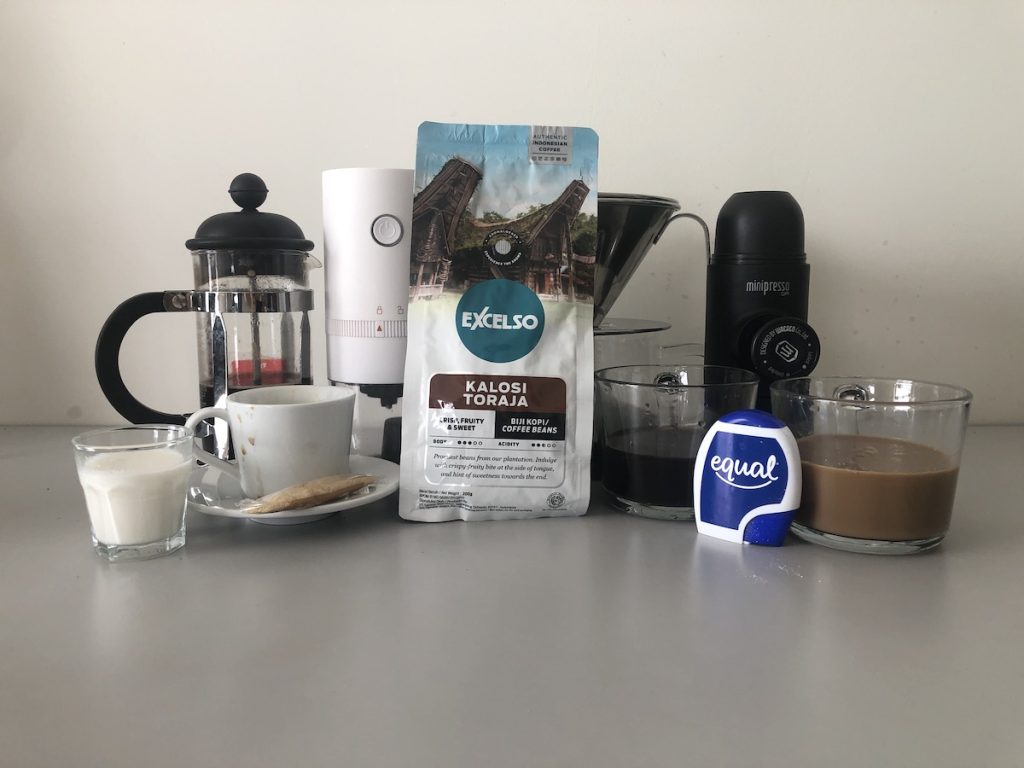
I will be using this set of gear to make my pour-over coffee:
My pour-over brewing steps are taken from Starbucks, based on a 1:18 ratio of coffee and hot water.
Espresso
The Sulawesi Kalossi Toraja is a medium roast, which may not make it a good candidate for espresso. However, I will still brew it as an espresso to see how the coffee tastes when I can concentrate the flavors into a small cup.
For espresso, I will be using my Wacaco Minipresso GR to pull an espresso shot. This is a hand-held, manually-operated espresso maker.
How Does Sulawesi Kalossi Toraja Taste?
French Press
The coffee looks a bit dark in color with some slight transparency, much like regular coffee. The aroma is very inviting, with a fresh bread-like smell.
The taste of the coffee matches the aroma; the coffee is soft, mellow, and smooth to the palate. Body and acidity are there, but not to the point that you may notice it much. It lingers in the background, doing its thing.
As I sipped the coffee, I picked up crisp notes of fruits, probably tropical ones, on my palate. There is also some starchy sweetness that tastes like fresh bread melting in my mouth.
After swallowing the coffee, the coffee finishes okay when there is some lingering taste of chocolate-like sweetness. This is a comfortable, easy-to-drink cup of coffee that I can enjoy all day.
Pour Over With Filter Paper
As expected, the pour-over version tastes a little less strong than the French press brew. It also looks less cloudy and has fewer particle deposits at the base of the cup.
The filter paper removed some coffee oils and particles, which theoretically helps to take away some of the bold, smokey, and earthy notes in the coffee.
The other flavor notes remain the same, with perhaps the finishing a little less intense than French press ones.
The fresh bread notes are about the same, although the fruity notes become a bit more crispier. I cannot be sure of the fruits, although I would guess it could be papaya. The coffee finishes well, similar to its French press version.
Espresso
My cup of Sulawesi Kalossi Toraja espresso looks beautiful, with darker, brownish crema. The crema layer is thick, rich, and smells amazing.
By sniffing, I can pick up the fresh bread notes from the crema. This is going to be a soft, flavorful cup of espresso. I was not wrong.
The usual burst of smoke is not there and is not as strong as traditional espresso. Replacing it are soft, fresh bread notes with a bit of wood.
If you allow the espresso to stay in your mouth a bit, you may pick up some fruity notes too.
Swallow the espresso down and allow your tongue to enjoy the aftertaste. I picked up some sweetness here.
With Sugar
Next up, I added a brown, coarse sugar stick to my cup of French press Sulawesi Kalossi Toraja coffee.
I tried the coffee and the sweetness is not enough – there is some sweetness, but it does not blend well with the coffee. I added half a stick more. The coffee now tastes much better and more balanced.
On the appearance, the sugar added a bit of shine to the coffee. It also made it a bit thicker, with better texture. Swish it in your mouth, and you’ll know what I mean. The coffee has a bit more ‘playful’ character, which may be enjoyable.
Taste-wise, the sugar accentuated the fresh bread and fruity note and helped cut into a bit of its acidity. This makes the coffee even more rounder and balanced in flavor.
With Sweetener
I chose Equal, one of the most popular artificial sweeteners. The active sweetener inside equal is Aspartame, which has different properties to sugar.
As a result, the sweetness I get from Equal is different from sugar. The sweetness seems to come later when I sip the Sulawesi Kalossi Toraja coffee. I get the initial burst of coffee earthiness and bitterness before the sweetness comes in.
Do note that this is very subtle. You may not even notice this.
However, it feels unnatural to me, and I much prefer this coffee’s sugared version.
With Milk
I used whole, UHT, fresh cow’s milk for this review. I added a single shot (about 30 ml or 1 oz) into my cup of coffee.
The milk turns the coffee brownish and gives an impression of the coffee mellowing out. This is confirmed in the tasting. The coffee becomes smoother and mellow, with a bit more texture.
There is also some subtle sweetness, thanks to the lactose in the milk. I think the subtle sweetness also elevated the coffee’s fresh bread and fruity notes.
The whole combination makes the coffee much more indulgent and decadent to drink. It is probably the second best way to enjoy this coffee after drinking it black.
With Creamer
With a non-dairy creamer, I turned to the regular Coffee Mate, a palm oil-based creamer. I added two teaspoons to my cup of French press Sulawesi Kalossi Toraja coffee.
Just like milk, it mellows the coffee down by adding fat. The fat also makes the coffee creamier, smoother, and more indulgent. The whole cup has subtle sweetness, although it tastes less natural than milk.
My issue with creamer here is that it does not seem as creamy as milk, which makes me prefer the latter. The creaminess feels more ‘hollow’ and less substantial than milk.
Iced
I combined a cup of slightly concentrated Sulawesi Kalossi Toraja with ice cubes in a glass. I then stirred the whole thing up before taking a sip.
The coffee tastes nice when chilled. The ice elevated the fresh bread and woody notes, making the coffee bitter and more satisfying. The acid, slightly sour notes also appear stronger as the ice melts, diluting the coffee.
I can see myself enjoying this coffee cold. I may use steel cubes instead of ice to avoid diluting my coffee, keeping it bitter and earthy longer.
Sulawesi Kalossi Toraja vs Other Indonesian Coffee
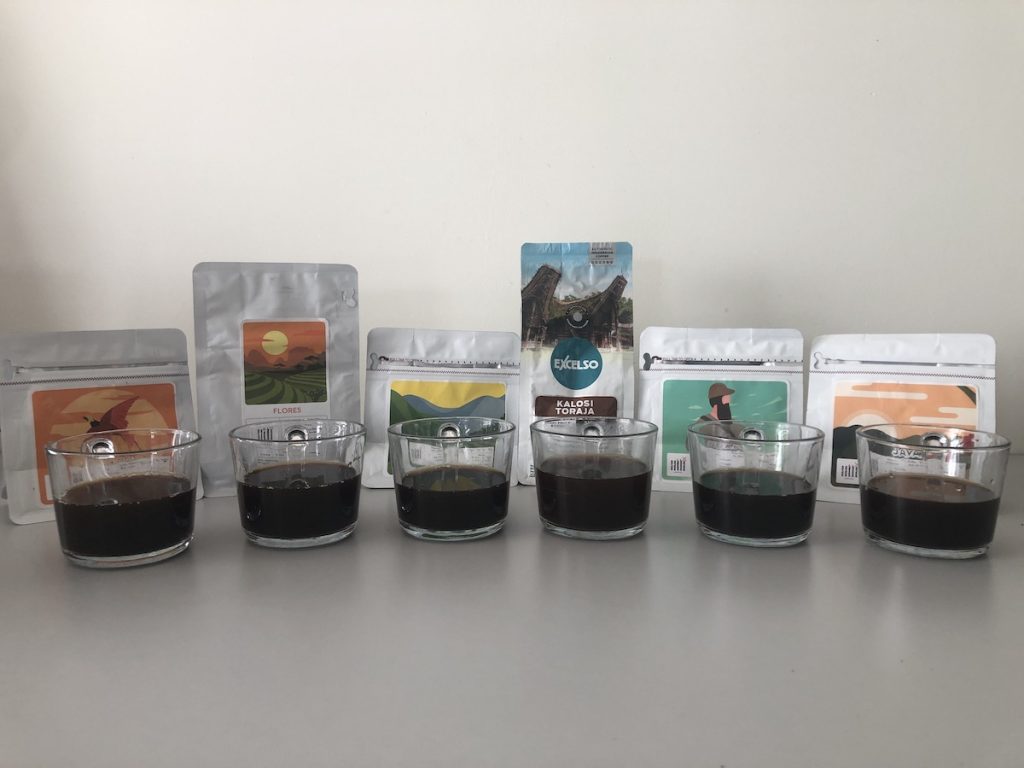
Since the Sulawesi Kalossi Toraja is an Indonesian coffee, I’ll compare it with other Indonesian coffee I have in my collection.
I pulled out these medium roasts, made coffee with them, and sipped them side by side with the Sulawesi Kalossi Toraja coffee:
- Papua Wamena Roast
- Flores Roast
- Sumatra Lintong Roast
- Java Preanger Tilu Roast
- Java Roast
I would not place the Sulawesi Kalossi Toraja first here. Instead, I’ll have Papua Wamena first. I’ll also make the Java Roast ahead too.
My reason? The Papua Wamena and Java Roast roast has a chocolate, malty note, which I much prefer over the fruity Sulawesi Toraja.
However, I do have to say that this is my personal preference. This means you may actually find the fruity notes much more enjoyable.
Sulawesi Kalossi Toraja vs Popular Medium Roasts
Next, I think to help you better understand the flavor of the Sulawesi Kalossi Toraja, I’ll compare it with popular medium roasts, which you can easily get from grocery shelves.
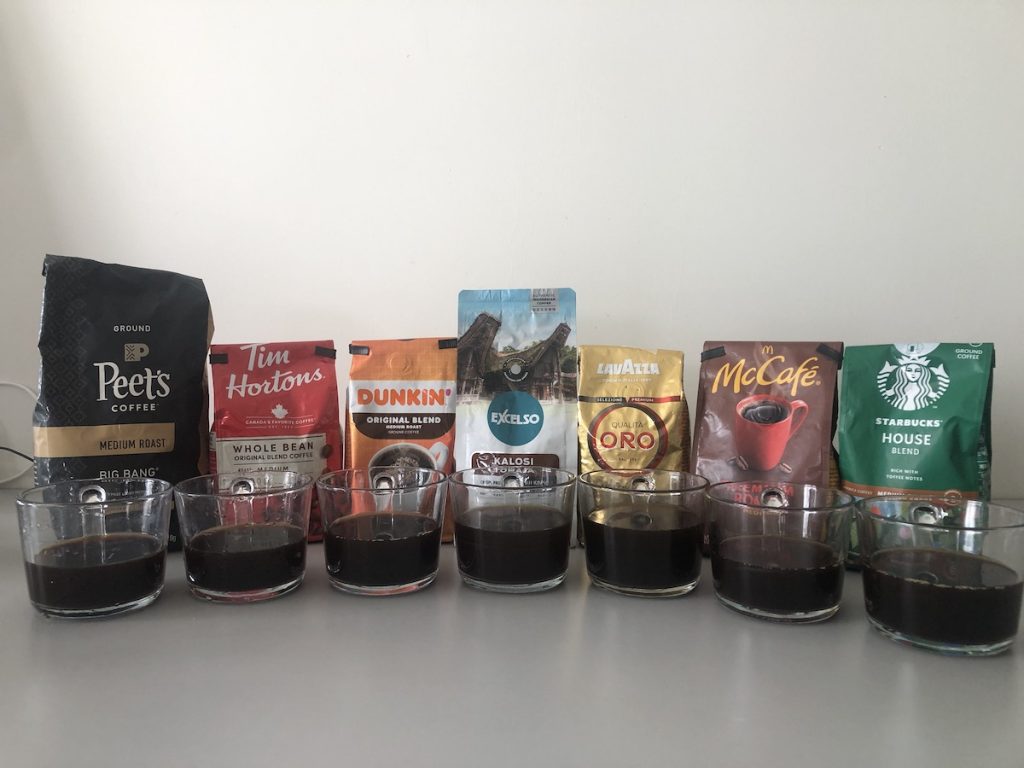
I lined up these medium coffee blends, brewed them, and drank them side by side with the Sulawesi Kalossi:
- Peet’s Big Bang Roast
- Tim Hortons Original Blend
- Lavazza Qualita Oro
- Dunkin Original Blend
- McCafe Premium Roast
- Starbucks House Blend
I would place Sulawesi Kalossi Toraja quite low from these coffee blends, probably only ahead of Starbucks’ House Blend.
My reason is that these blends have the kind of flavors I enjoy, just regular coffee with soft notes of nuts, chocolate, or malt. Some have a way to trigger my desire to bite into something savory or sweet, such as the Tim Hortons and the McCafe roast.
These are the things the Sulawesi Toraja coffee cannot do. It only ranks ahead of the Starbucks House Blend because it is less smoky and more enjoyable to my palate.
Sulawesi Kalossi Toraja vs Regular Brewed Coffee
I picked up a cup of regular Americano from the most regular of places, a 7-Eleven.
I want to compare my Sulawesi Kalossi Toraja coffee with a regular cup of joe, especially those $1 coffees you can get from gas stations or convenience stores.
There is no doubt here – the Sulawesi Kalossi Toraja coffee wins here. The Sulawesi coffee tastes better, with better flavor depth and a more pleasant finish. It gives me more satisfying sips, too.
Is Sulawesi Kalossi Toraja For You?
After sipping the coffee, I think this is a soft, easy-to-drink coffee that many will find enjoyable.
The fruity, fresh bread notes will appeal to many drinkers, especially those who enjoy soft coffee, to start their day. If you are used to stronger, bolder coffee, this will be a boring cup that will not satisfy you.
However, do know that, to me, this is not the best Indonesian coffee out there. The best to me remains the single-origin roast from Wamena, in the Papua province of Indonesia.Finally, this may be an Indonesian roaster, but you can pick up a bag right from Amazon.